







提醒成功




 微信/QQ登录
搜索


 首页
首页

Rabbit Polyclonal antibody to CD172a
-
货号:
54476 -
别名:
Tyrosine~protein phosphatase non~receptor type substrate 1; SHP substrate 1; SHPS~1; Brain Ig~like molecule with tyrosine~based activation motifs; Bit; CD172 antigen~like family member A; Inhibitory receptor SHPS~1; Macrophage fusion receptor; MyD~1 antigen; Signal~regulatory protein alpha~1; Sirp~alpha~1; Signal~regulatory protein alpha~2; Sirp~alpha~2; Signal~regulatory protein alpha~3; Sirp~alpha~3; p84; CD172a; SIRPA; BIT; MFR; MYD1; PTPNS1; SHPS1; SIRP -
应用:
WB -
反应种属:
Human,Rat,Mouse -
抗体类型:
Primary antibody -
Swissprot:
P78324 -
规格:
-
数量:
-+ -
说明书:

目录价¥1180



Rabbit Polyclonal antibody to CD172a
Description |
|---|
SHP~substrate 1 (SHPS1, SIRPα) is a single~pass membrane protein and member of both the immunoglobulin superfamily and the signal regulatory protein (SIRP) family. Following growth hormone stimulation or integrin binding, SHPS1 is phosphorylated at several tyrosine residues within its cytoplasmic tail. These phosphorylation events promote association between SHPS1 and multiple signaling proteins, including SHP~1, SHP~2, Grb2 and Shc via their SH2 domains. Recruitment of SHP~1 and SHP~2 results in SHPS1 dephosphorylation and suppression of tyrosine kinase signaling. The tyrosine kinase JAK2 associates with SHPS1 via its carboxy terminus and phosphorylates SHPS1 in response to extracellular stimuli. Research studies show that Src associates with and may phosphorylate SHPS1 in response to insulin. In macrophages, SHPS1 can form a complex with the Src pathway adaptor protein SKAP2, Fyn~binding protein FYB, and the tyrosine kinase PYK2. The SHPS1 extracellular domain contains at least three IgG~like domains that interact with CD47, a ubiquitously expressed, integrin~associated protein that acts as a repressive cue in both immune and neuronal cells. The interaction between CD47 and SHPS1 on opposing cells can inhibit cellular migration, promote "tethering" between macrophages and target cells during engulfment, facilitate self versus non~self recognition, and maintain immune homeostasis. SHPS1 plays a critical role in modulating the immune response and inflammation, and may play a role in neuronal development. The interaction between SHPS1 and CD47 may be an exploitable target in cancer therapy. |
Specification |
|
|---|---|
| Aliases | Tyrosine~protein phosphatase non~receptor type substrate 1; SHP substrate 1; SHPS~1; Brain Ig~like molecule with tyrosine~based activation motifs; Bit; CD172 antigen~like family member A; Inhibitory receptor SHPS~1; Macrophage fusion receptor; MyD~1 antigen; Signal~regulatory protein alpha~1; Sirp~alpha~1; Signal~regulatory protein alpha~2; Sirp~alpha~2; Signal~regulatory protein alpha~3; Sirp~alpha~3; p84; CD172a; SIRPA; BIT; MFR; MYD1; PTPNS1; SHPS1; SIRP |
| Swissprot | P78324 |
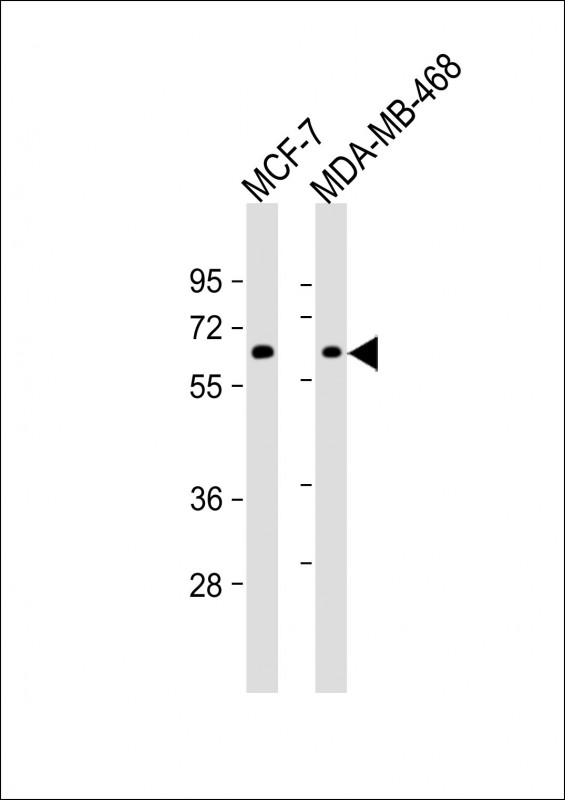
| WB Predicted band size | ~55~130kDa |
| Host/Isotype | Rabbit IgG |
| Antibody Type | Primary antibody |
| Storage | Store at 4°C short term. Aliquot and store at ~20°C long term. Avoid freeze~thaw cycles. |
| Species Reactivity | Human,Rat,Mouse |
| Immunogen | Recombinant protein of human CD172a. |
| Formulation | 1mg/ml in PBS with 0.02% sodium azide, 50% glycerol, pH7.2. |
Application |
|
|---|---|
| WB | 1/1000~1/2000 |
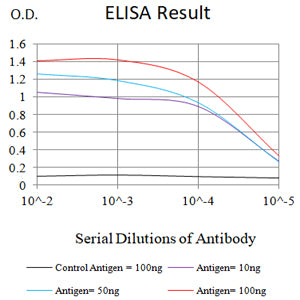
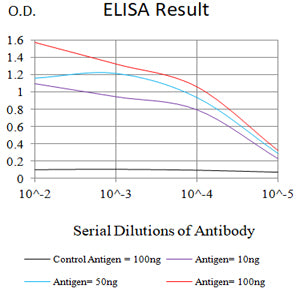
Product Image
For Reseach Only
Application Key:WB - Western Blot | IHC - Immunohistochemistry | ICC - Immunocytochemistry | FCM - Flow Cytometry | ELISA - Enzyme-linked Immunosorbent Assay | IP - Immunoprecipitation
#54476
相关产品



联系方式
CONTACT-
联系电话:
0731-88388785 -
公司邮箱:
sales@promab.cn -
公司地址:
湖南省长沙市高新开发区林语路239号顺畅产业园5楼
 官方微信
官方微信
产品中心
Product技术服务
service客户留言
message